
Dragon Boat Festival 2025

Chinese Dragon Boat Festival
also known as the Duanwu Festival (端午节), is a traditional Chinese holiday that falls on the fifth day of the fifth month of the lunar calendar, so the date varies each year according to the Gregorian calendar.
Origins and Significance:
The festival commemorates the death of the patriotic poet Qu Yuan (屈原), who lived in the 3rd century BC during the Warring States period. Qu Yuan, a minister of the State of Chu, committed suicide by drowning himself in the Miluo River after Chu was occupied by an enemy. The local people, to prevent the fish from eating his body, paddled their boats and threw rice balls (zongzi) into the river, giving rise to the current dragon boat races and the tradition of eating zongzi.
Festival Traditions:
– Dragon Boat Races: Teams paddle long boats decorated with dragon heads and tails, competing to reach the finish line first.
– Eating Zongzi: Glutinous rice wrapped in bamboo leaves, often filled with meat, beans, or dates.
– Drinking Realgar Wine: A medicinal wine believed to ward off diseases and evil spirits.
– Wearing Fragrant Pouches: Filled with aromatic herbs, these pouches are worn for protection against diseases.
Symbolism:
The festival celebrates patriotism, loyalty, and the sacrifice of Qu Yuan, and it is an important occasion for cultural reflection and the celebration of Chinese traditions.
Modern Celebration:
Today, the Dragon Boat Festival is a public holiday in China and is celebrated with cultural events, sporting activities, and various traditional rituals, keeping ancient customs alive.
New legislation for China’s private sector economy
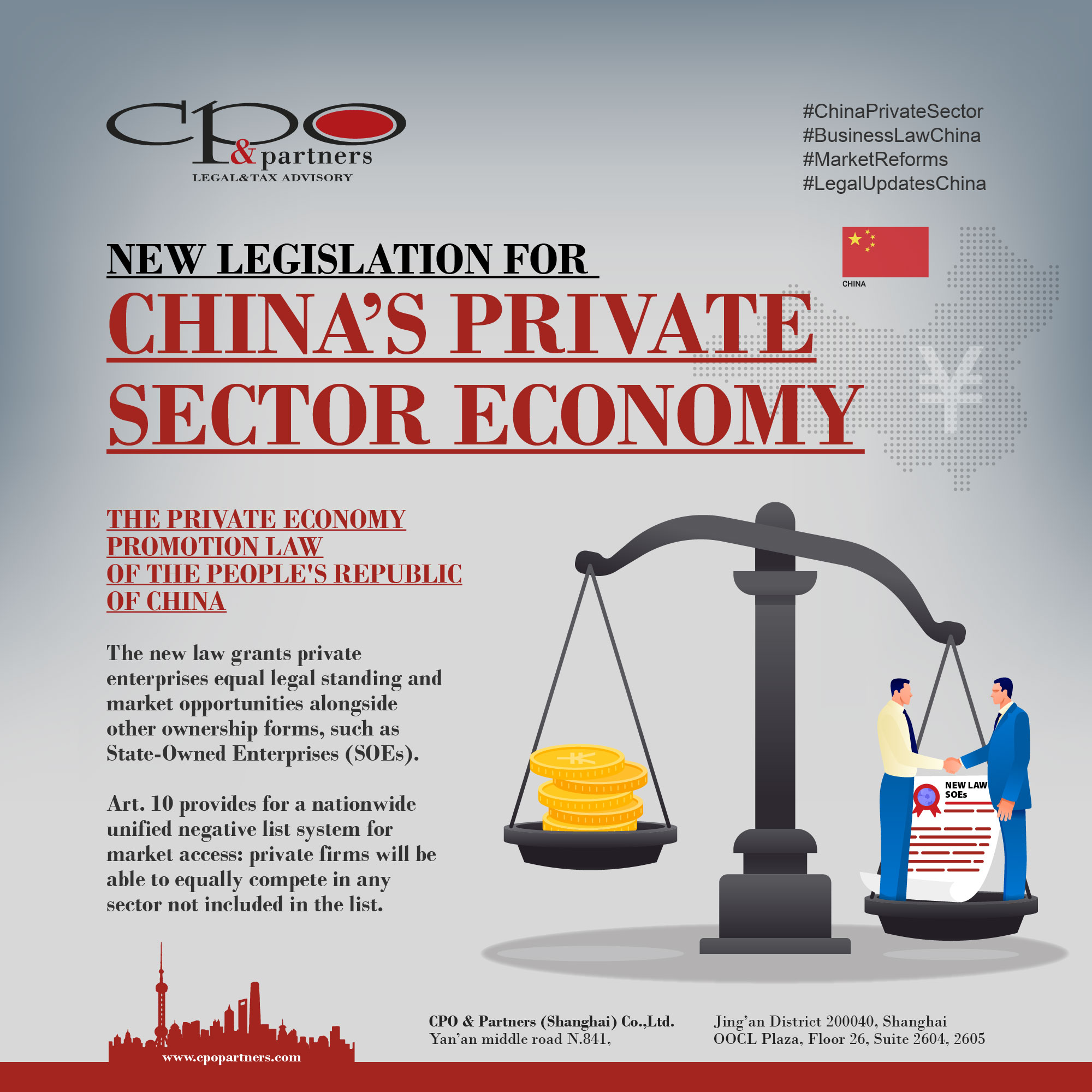
New legislation for China’s private sector economy
The Private Economy Promotion Law of the People’s Republic of China was adopted by the Standing Committee of the National People’s Congress on 30 April 2025, and took officially effect on 20 May.
The new law grants private enterprises equal legal standing and market opportunities alongside other ownership forms, such as State-Owned Enterprises (SOEs). The legislation acts in favor of fair competition practices for private firms, in terms of access to bidding, procurement etc. For example, Art. 10 provides for a nationwide unified negative list system for market access: private firms will be able to equally compete in any sector not included in the list.
Another important point is related to R&D schemes: private enterprises are encouraged to undertake major national science and technology projects, while entitled to receive from the state greater research infrastructure and data resources. The law also mandates government bodies and SOEs to honor payment obligations on schedule, with penalties for default.
Having faced for long-time discrimination and inequality of treatment compared to SOEs, private firms may find enhanced protection through the new legislation. However, as often occurs in the country, the actual safeguards offered by the law can only be evaluated against future enforcement mechanisms.
China’s Green Push: Shanghai 2025 Vehicle Replacement and New Energy
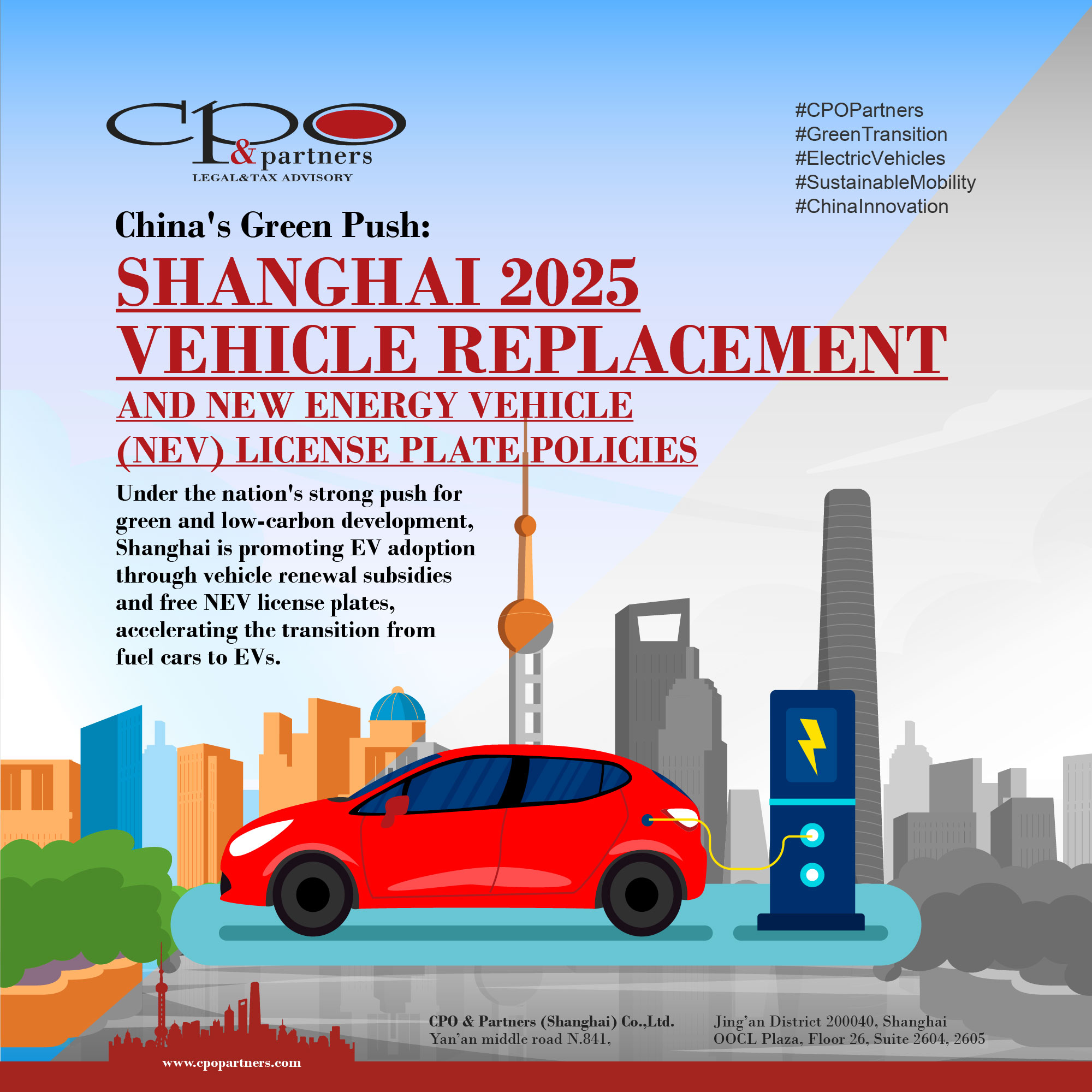
Under the nation’s strong push for green and low-carbon development, Shanghai is promoting EV adoption through vehicle renewal subsidies and free NEV license plates, accelerating the transition from fuel cars to EVs.
I. Shanghai Vehicle Replacement Policies
In terms of green initiatives for the replacement of old fuel vehicles, in February several Shanghai Municipal Commissions and Bureaus issued the Notice No. 20 [2025] “Implementation Rules for the National Vehicle Scrapping and Renewal Subsidy Policy for 2025”, taking effect upon issuance and valid until 31 March 2026.
The Rules provide for a one-time fixed subsidy for all eligible individual consumers who, between 1 January and 31 December 2025, decide to scrap gasoline passenger vehicles or new energy passenger vehicles (electric vehicles but registered before 31 December 2018) to buy new energy passenger vehicles listed in a specific Catalog issued by the Ministry of Industry and Information Technology. The consumers will also be able to purchase fuel passenger vehicles with set limitations on the engine displacement. The subsidy will be equal to Rmb 20.000 for the purchase of new energy vehicles, Rmb 15.000 for the purchase of fuel vehicles that are complaint with the limitations imposed.
II. Shanghai New Energy Vehicle License Plate Policies
- Shanghai Green License Plate – Exclusive for Pure Electric Vehicles and Fuel Cell Vehicles
According to the “2025 Shanghai Measures to Encourage the Purchase and Use of NEVs”, especially for non-local residents holding a Shanghai Residence Permit, they now only need to have paid social security or personal income tax for 36 months (previously 48 months) to qualify for a free green (NEV) license plate. For applying organizations, they need to have more than five employees enrolled in Shanghai’s social security system or have continuously paid taxes in Shanghai for at least one year before applying. From the application to the final license plate issuance, the process usually takes about half a month.
- Shanghai Blue License Plate – Auction for Traditional Fuel Vehicles
Individuals with Shanghai household registration or non-local residents holding a Shanghai Residence Permit who have continuously paid social security or personal income tax for the past six months, as well as legally registered companies, can apply for the auction of Shanghai blue license plates through online or offline channels by completing the required procedures, including bidding registration and deposit payment. Recent data shows that the average winning bid for an individual blue license plate is approximately Rmb 93,600, while for organizations, it ranges from Rmb 120,000 to Rmb 160,000. The entire process, from the application to the final license plate issuance, may take 2 to 6 months to complete.
III. Green and Blue License Plates Outside Shanghai
Outside Shanghai, big cities like Beijing, Guangzhou and Shenzhen present a similar scenario in terms of waiting time to obtain a NEV green license plate, with an estimate time of around 1-2 weeks. As for the requirements, the key difference is the existence of a quota system, whose process is however more streamlined compared to the quota system for blue plates. Traditional fuel vehicle blue plates in these three cities are managed through a lottery system or a hybrid system of auctions and lotteries. In the capital city, the chances of obtaining the plate are quite low, 0.2% in 2023, and the waiting period can be of several years. As for the hybrid system in Guangzhou and Shenzhen, the average auction price is in the range of Rmb 30,000 to Rmb 50,000, with a waiting period varying from a few months to over a year.
In China, certain cities may impose temporary or permanent limitations for vehicles with non-local license plates. For example, in order to reduce traffic and pollution, in Shanghai drivers with plates issued in other cities are restricted from using specific elevated roads during peak hours, and an additional fee must be paid to use certain expressways. However, looking at a broader perspective, there are not significant restrictions in the country for driving with a non-local car plate.

2025 Jiangsu Nantong Science & Technology Park Promoting Conference
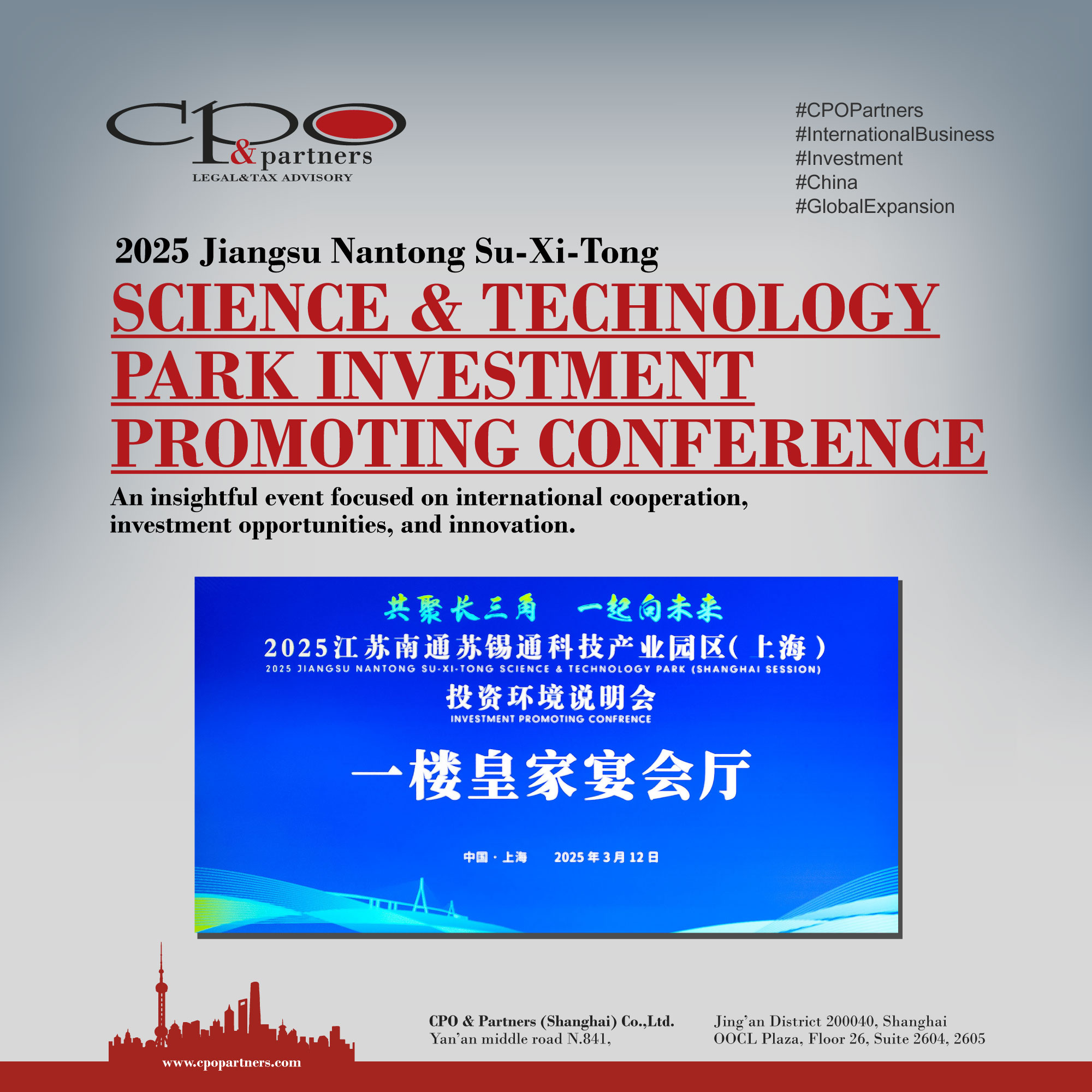
CPO & Partners was honored to participate as a guest at the 2025 Jiangsu Nantong Su-Xi-Tong Science & Technology Park Investment Promoting Conference in Shanghai.
An insightful event focused on international cooperation, investment opportunities, and innovation. Grateful for the opportunity to exchange ideas and strengthen business relations between Europe and China.
#CPOPartners #InternationalBusiness #Investment #China #GlobalExpansion
A glance into China’s retirement age from 2025
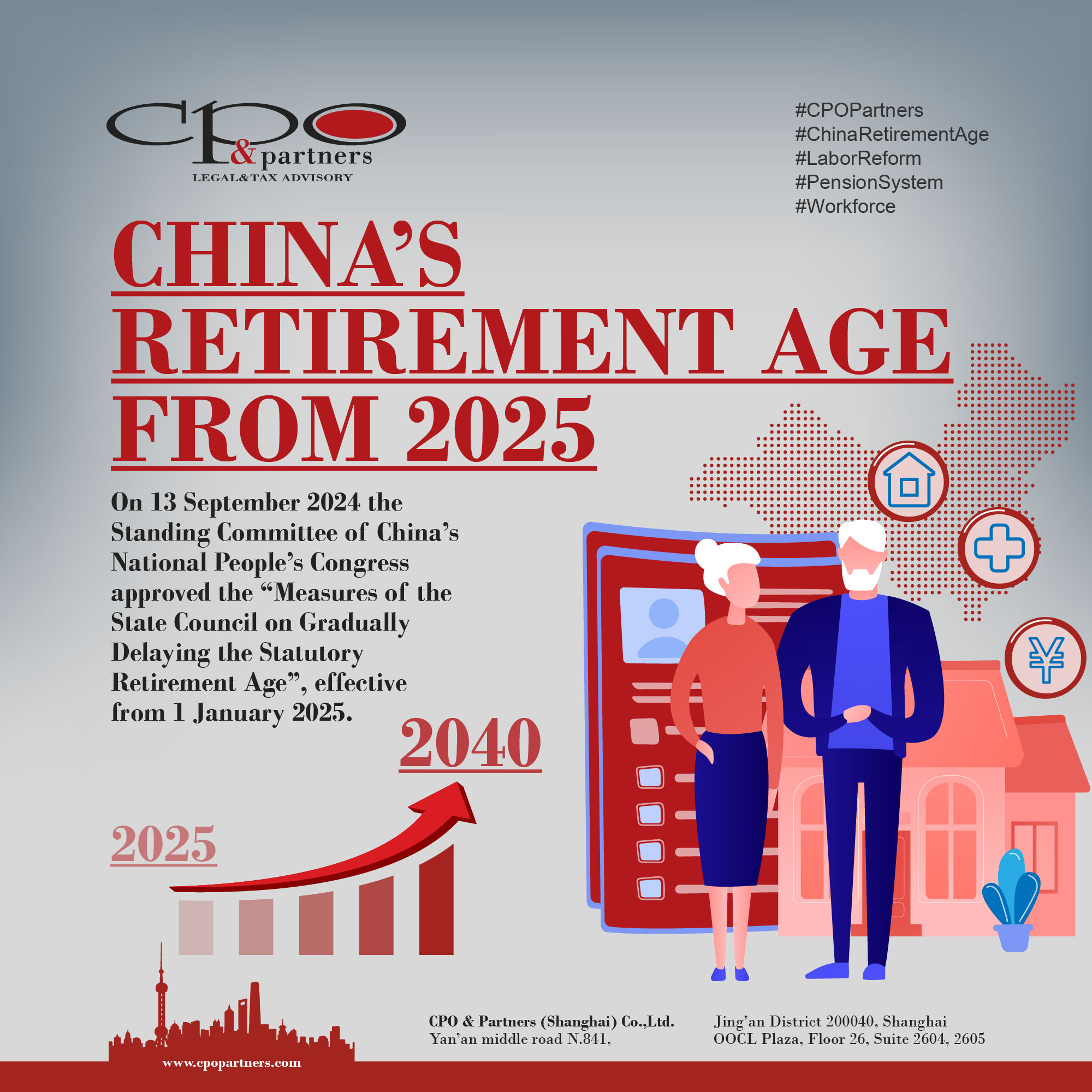
On 13 September 2024 the Standing Committee of China’s National People’s Congress approved the “Measures of the State Council on Gradually Delaying the Statutory Retirement Age”, effective from 1 January 2025. The Measures provide for a gradual increasing of the statutory retirement age in a period of 15 years: male employees and female employees in white-collar positions, previously retiring at 60 and 55 years old respectively, will see an increase of 1 month for every 4-month period, to reach 63 and 58 in 2040. Female employees in blue-collar position will pass from the current 50 to 55 in 2040, with a raise of 1 month for every 2-months period. For example, a male employee who was supposed to retire on 1 January 2025 will now retire on 1 February 2025 (1 month increase); one who was going to retire on 1 May 2025 will now retire on 1 July 2025 (2 months increase).
Additionally, minimum contribution years to enjoy pension benefits will also gradually increase from 1 January 2030. From 15 years of paid contributions, each year 6 months will be added, until reaching 20 years.
On 31 December 2024 the “Interim Measures for the Implementation of the Flexible Retirement System” Notice was released by three Ministries and the Organization Department of the Party’s Central Committee. The Notice, also in force from 1 January 2025, expands on the provisions for the flexible early and delayed retirement: employees that reached the minimum contribution period and those who reached the legal retirement age can respectively choose to retire early, given that the retirement age is not lower than the pre-2025 thresholds, and to retire later than the legal retirement age.
The attached document includes the related comparison tables, according to gender and job positions, explaining how the statutory retirement age will be progressively delayed. The tables are in Chinese language with an English translation for reference.

CPO & Partners was awarded the Nanhu District of Jiaxing, Excellent Partner

CPO & Partners was awarded the Nanhu District of Jiaxing, Excellent Partner
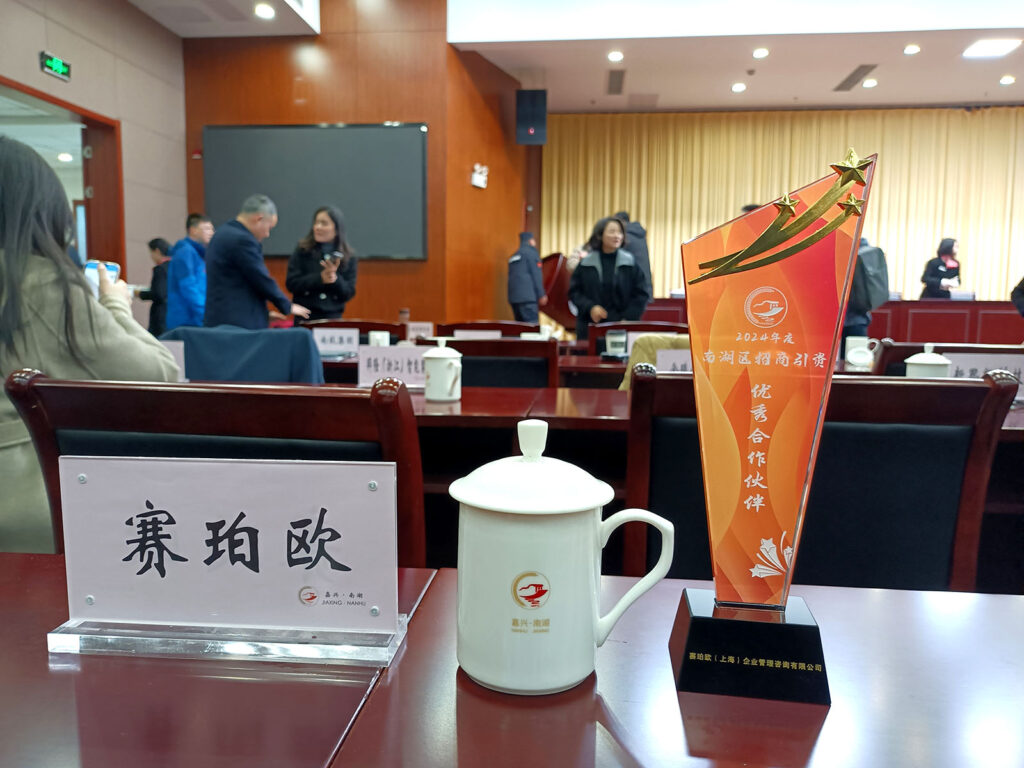
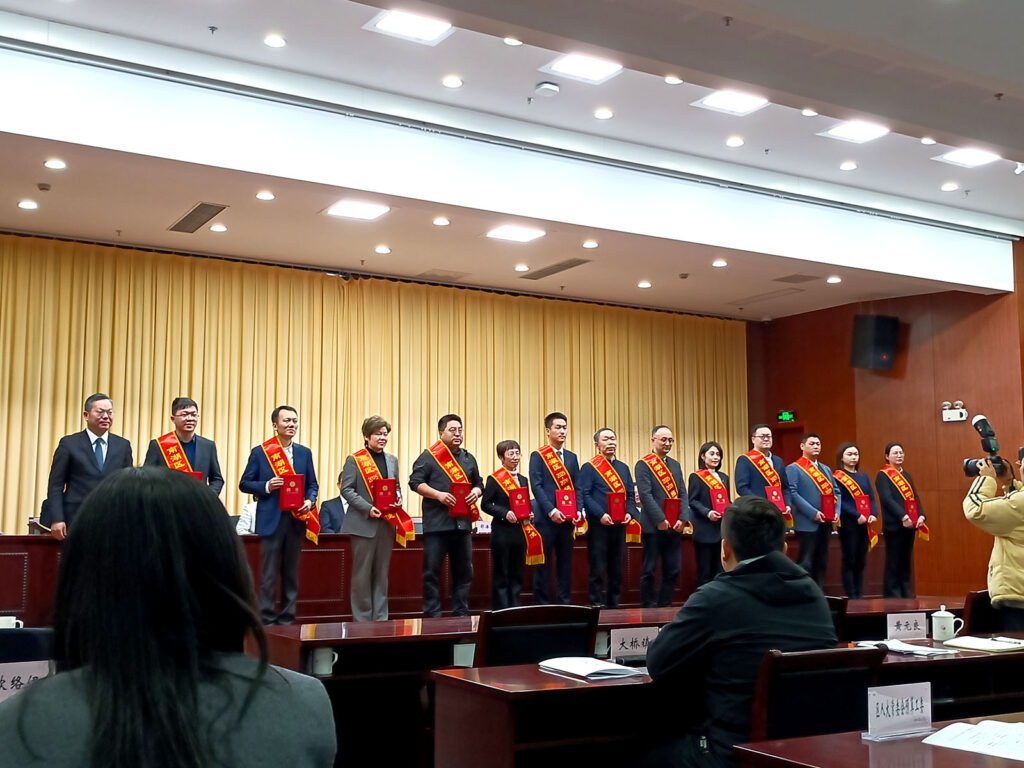
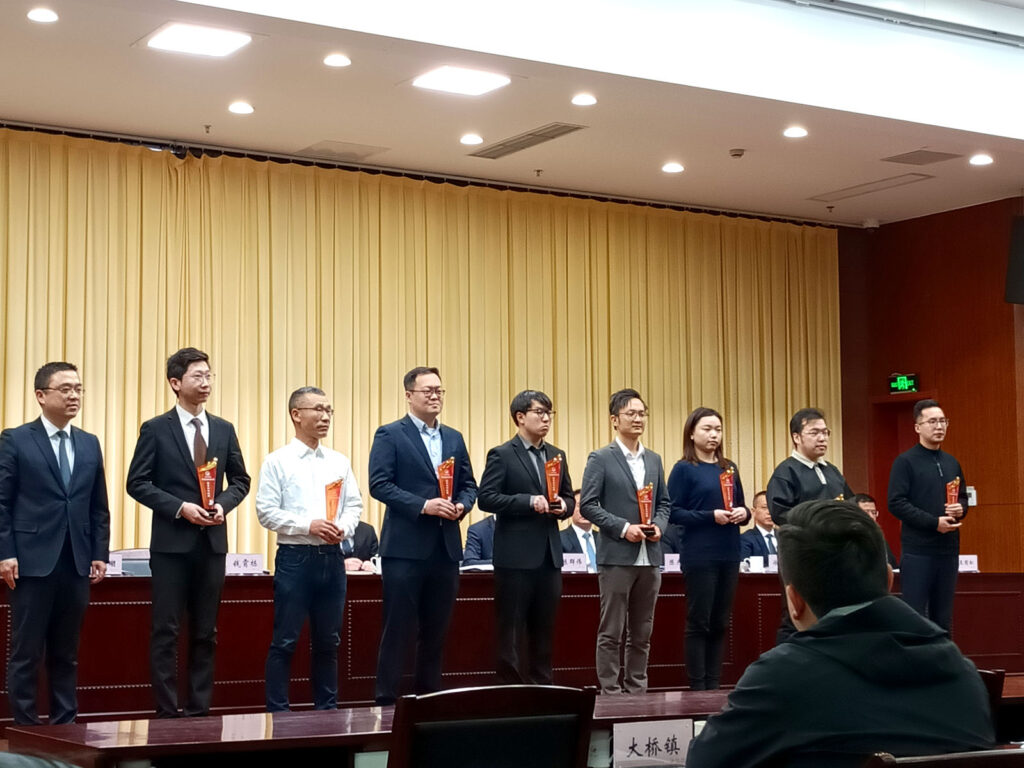
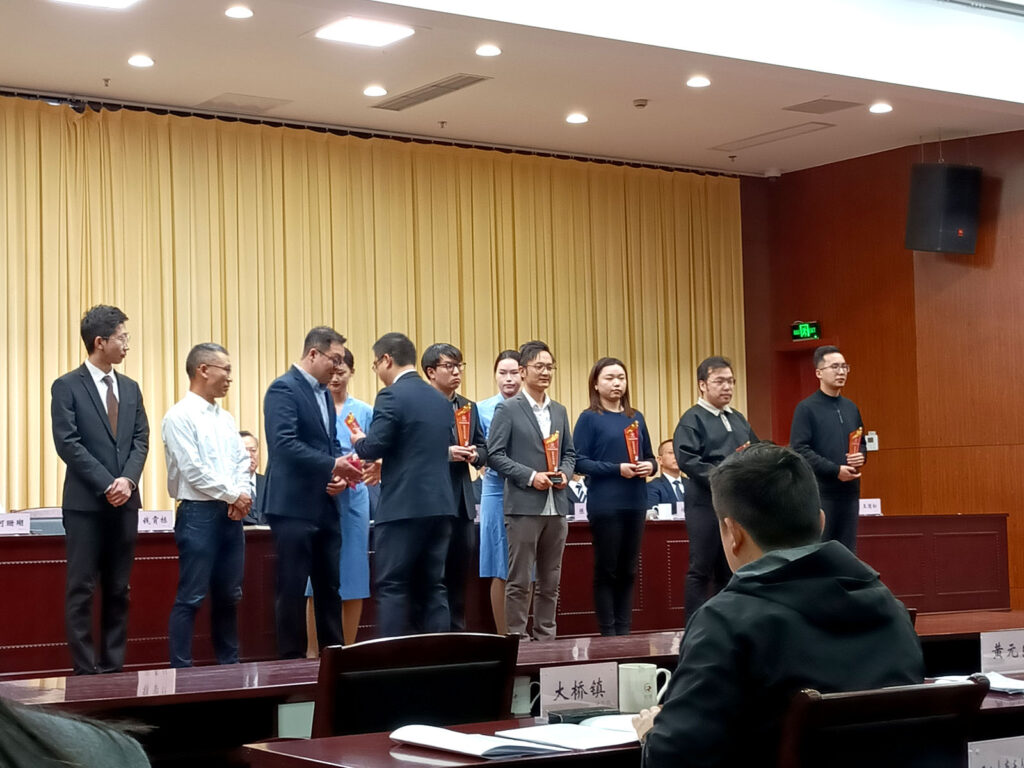
Last 10 January 2025, a delegation of CPO Shanghai was invited to visit the complex of the People’s Government of Jiaxing City’s Nanhu District, to attend the 2025 Nanhu District Investment Promotion Conference and receive the award of Excellent Partner. On the occasion, at the presence of the authorities representing the District, Mr. Chen Fangtian, Legal Associate, representing CPO, retrieved the award of Excellent Partner, in recognition of the networking activities organized as an investment promotion ambassador of Nanhu District in China and abroad. Last year, CPO and its Joint Venture Dragon Bridge Investment cooperated with representatives from Nanhu to facilitate the introduction of the District as an ideal hub for foreign investors in China.
In particular, CPO was among the sponsors of the event “Destination Yangtze River Delta: Meeting with Jiaxing, Nanhu District”, held in Milan, Palazzo Clerici, on 5 September 2024 with more than 80 participants whose most part were renowned and excellent Italian SMEs, while both CPO and Dragon Bridge Investment sponsored the event “Shanghai and Jiaxing: A New Opportunity”, activity organized in the context of the November 2024 CIIE (China International Import Expo).
This award brings forth a new year sets to build on past achievements and make further progress in the bilateral investment promotion between Italy and China.
The CBAM compliance enters a new phase
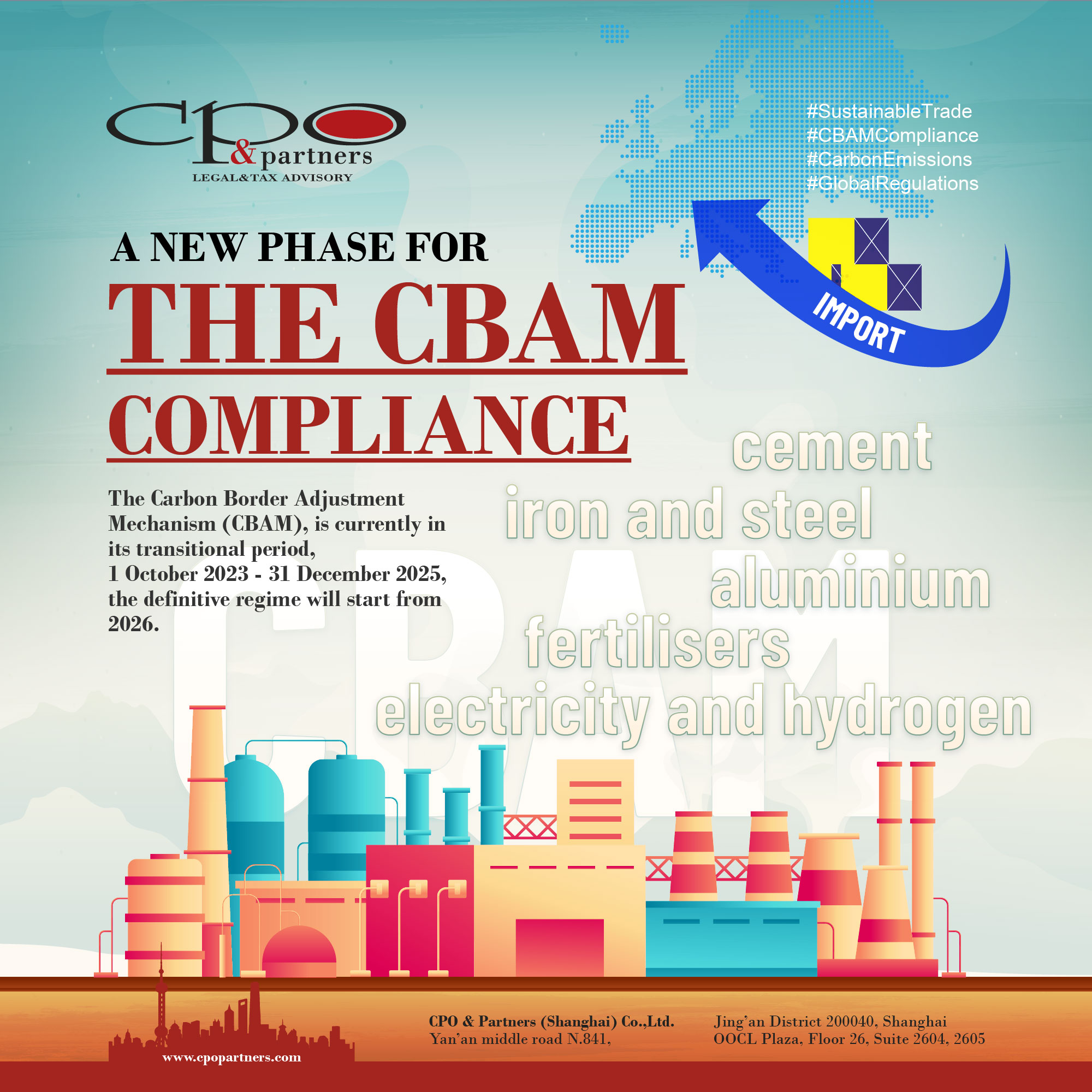
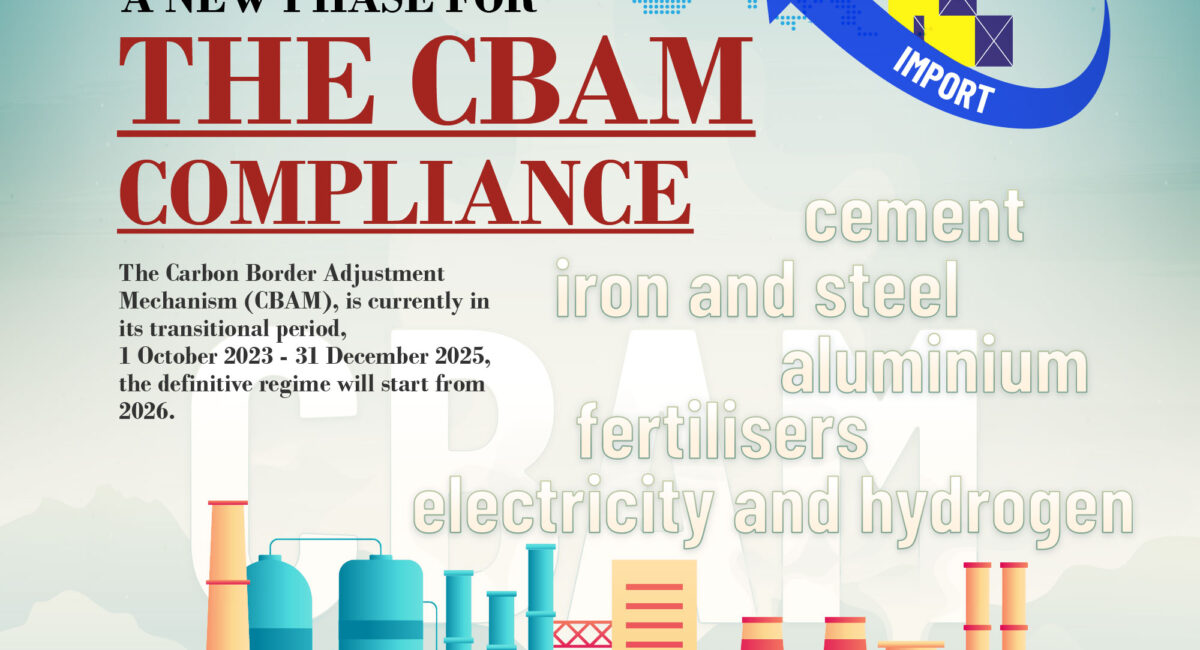
The Carbon Border Adjustment Mechanism (CBAM), established with the EU Regulation No. 2023/956 of 10 May 2023, is an environment protection policy aimed to put a price on the emissions generated in the production of specific goods imported into the EU. Currently in its transitional period, 1 October 2023 – 31 December 2025, the definitive regime will start from 2026.
At the moment the CBAM applies to cement, iron and steel, aluminium, fertilisers, electricity and hydrogen: when importing from non-EU countries, importers have to report related emissions, considering both the direct emissions from manufacturing, and the indirect emissions from the generation of used electricity.
On last 1 January 2025, the CBAM-related compliance entered a new phase, with the official launch of the CBAM Registry’s new section allowing suppliers outside the EU to share goods’ emissions data with the EU importers.
After the full implementation, importers will need to purchase CBAM certificates corresponding to the emissions of imported goods, with deductions allowed for costs incurred in the country of origin. A system of penalties for non-compliance is already in place.
The CBAM will surely impact on companies that import from non-EU countries such as China, thus making it essential to have up-to-date information to proceed with the related compliance activities.
New tax rebate rates for exports from China
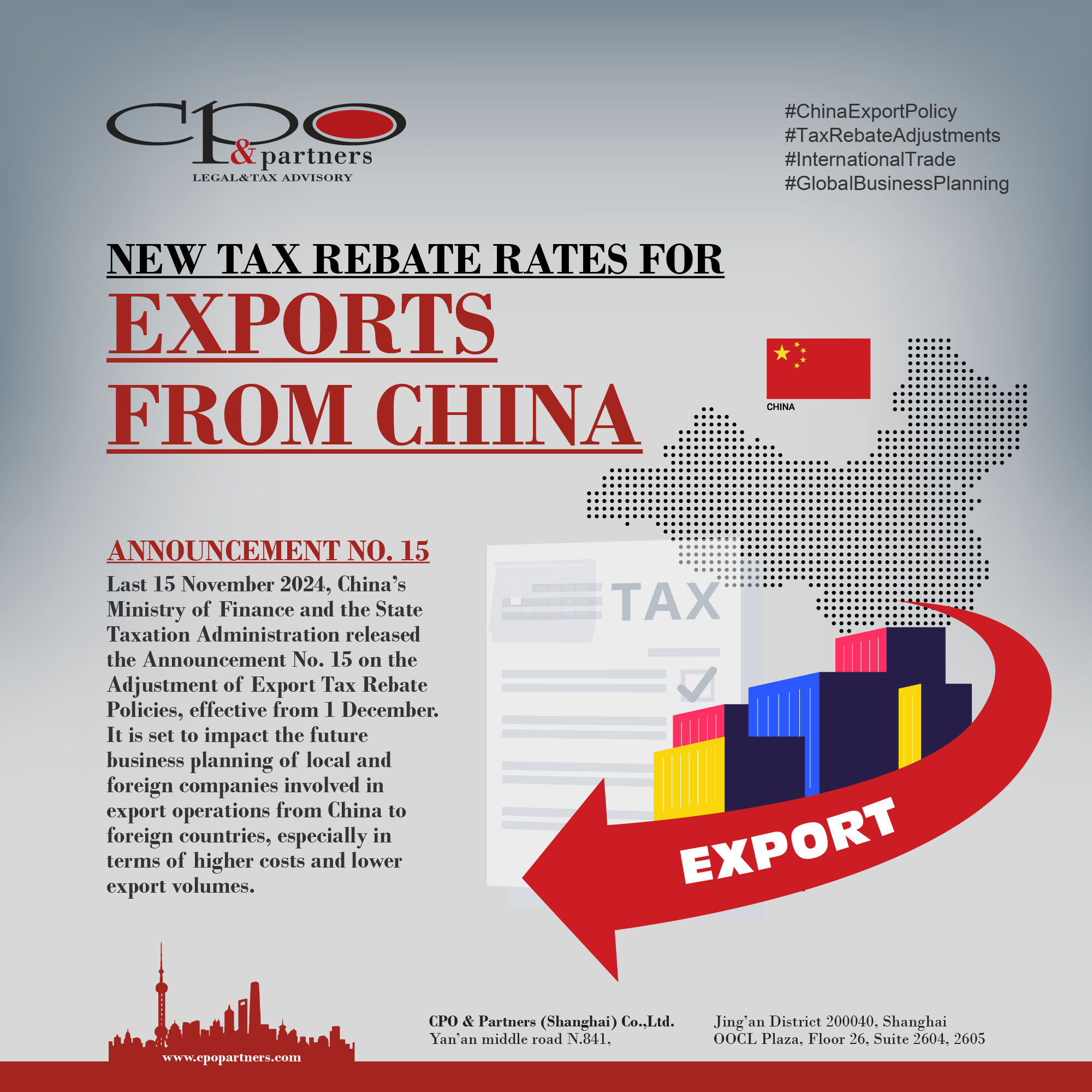
Last 15 November 2024, China’s Ministry of Finance and the State Taxation Administration released the Announcement No. 15 on the Adjustment of Export Tax Rebate Policies, effective from 1 December. It is set to impact the future business planning of local and foreign companies involved in export operations from China to foreign countries, especially in terms of higher costs and lower export volumes.
Two different sets of adjustments were introduced on China’s export tax rebate, incentive system started in 1985 through which refunds are given to exporters on VAT and consumption tax (CT) paid before the export of their products abroad. The first set provides for the cancellation of the tax rebate on 59 items, including copper and aluminium products (plates, sheets, bars etc.), chemically modified oils and fats, and other kinds of metals.
The second set includes a reduction of the VAT rebate rate from 13% (which entailed a full refund of VAT on purchases, being 13% in China) to 9% for 209 items. Refined oils, batteries, photovoltaic products are among the affected categories.
Seen since its inception as a strategic policy to improve the competitiveness of exported goods in the international market, the VAT Tax Rebate (出口退税) system allows exporters to recover VAT on goods intended for export, receiving the VAT paid on purchases (in full or in part, based on the specific VAT refund percentage defined for each customs code) directly into the company bank account, in a relatively short time (1-2 months) from the submission of the necessary documentation relating to export. The Tax Rebate system is applicable both to companies that carry out trading activities and to the manufacturing companies, with different application rules.
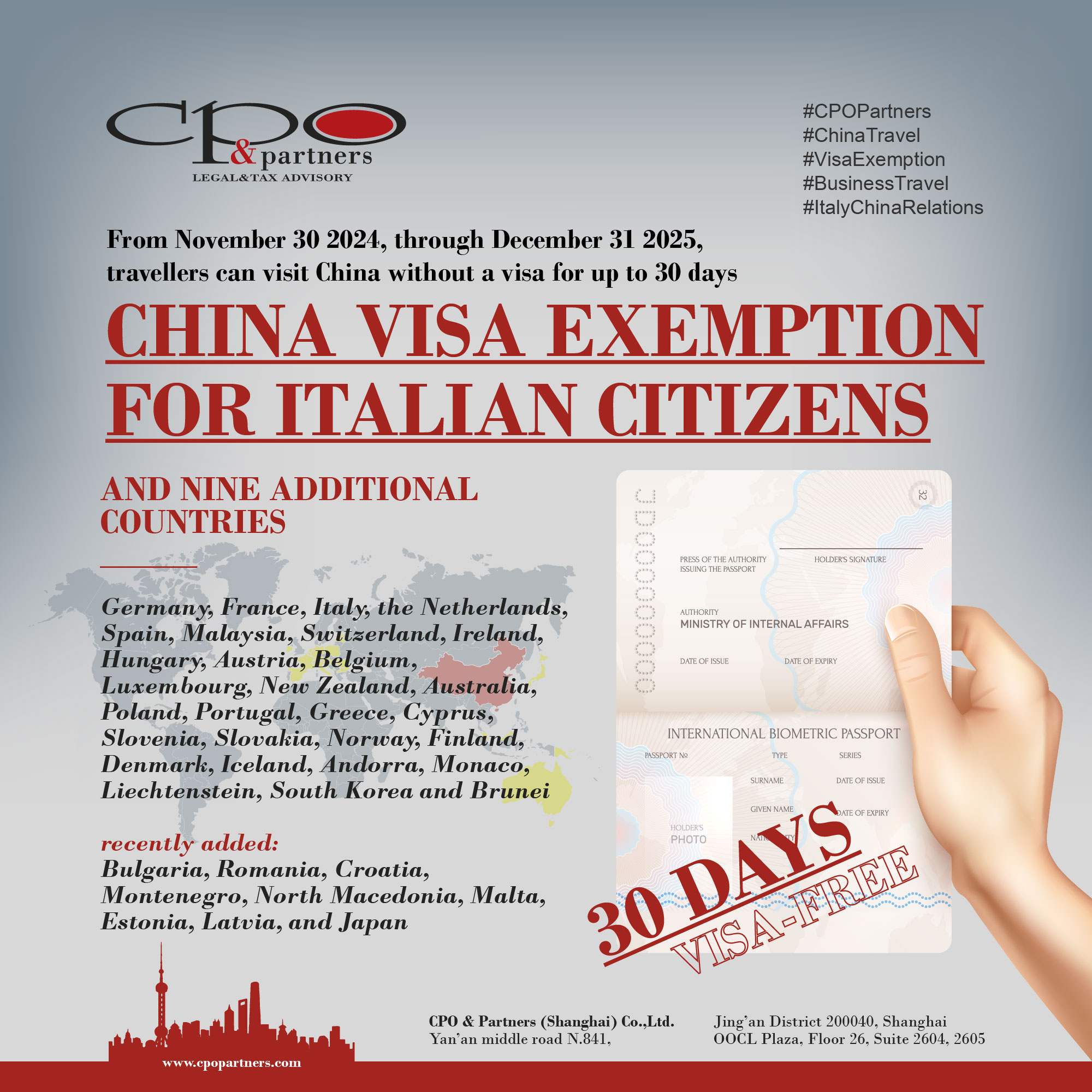
China Visa Exemption Update